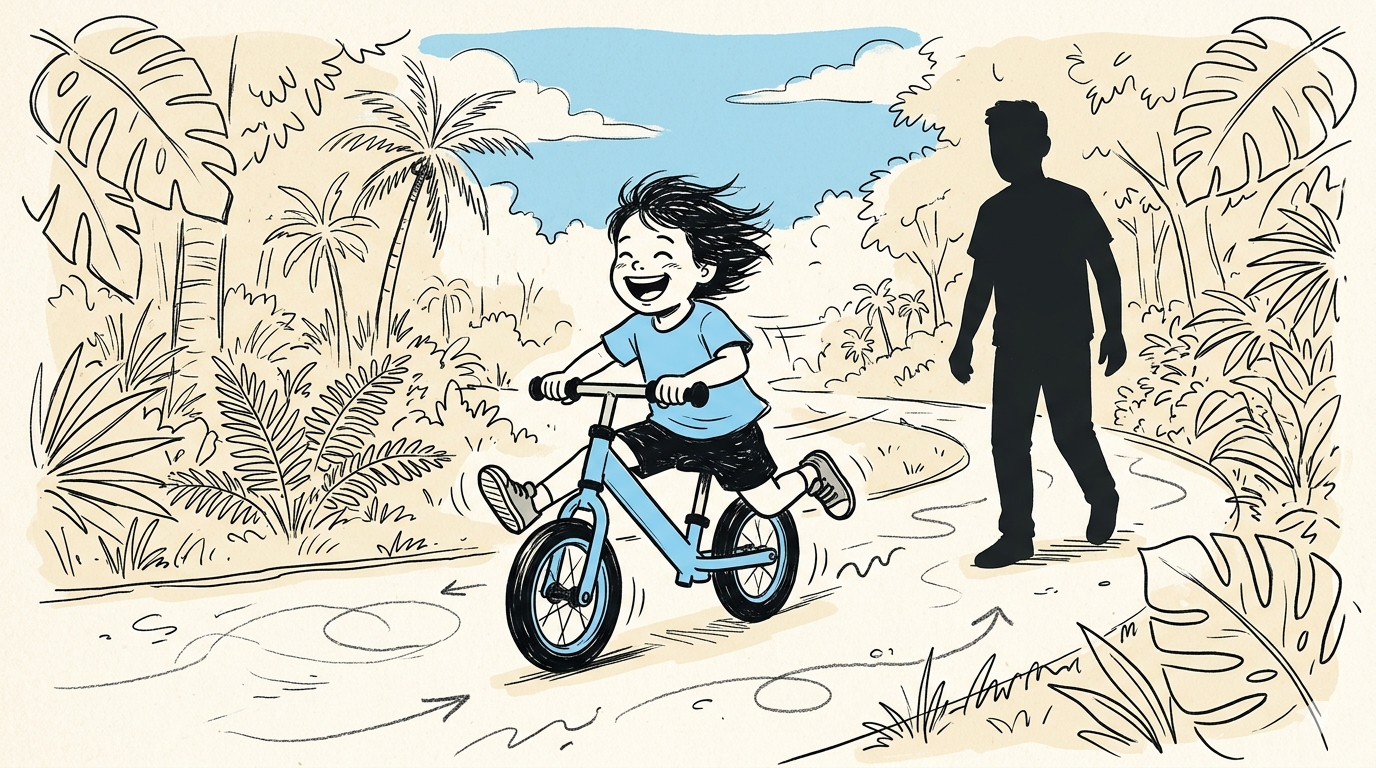
The honest answer is: there isn't one.
We've taught kids as young as four and teenagers who hadn't ridden before. Both ended with satisfying results! Some begun pedalling on their own after the first lesson. Both were beaming. Both took roughly the same amount of time to get there. Age is a much smaller factor than parents think.
What matters — much more than the number on the birthday cake — is your child's interest, attention span, and confidence.
Signs your kid is ready
You don't need to wait until they ask. But these usually mean it'll click quickly:
- They can balance for a few seconds. That's the core motor skill.
- They follow short instructions. "Look at me, push the pedal, look ahead." If they can do that for ten minutes at a stretch, they're ready.
- They want to keep up with someone who rides. A sibling, a friend, a parent. Motivation matters more than coordination.
If your child is curious but a little nervous, that's normal — most are. Patience handles that. What you don't want is a child who's actively resisting. Pushing a reluctant kid usually makes them more reluctant. Wait a few months and try again.
Normal bicycles vs training wheels
If you're choosing equipment for a young child, we strongly prefer normal bicycles without training wheels.
Here's why: training wheels could introduce the wrong thing. It teaches a child to lean into a wobble and rely on the side wheel to counter balance them. Real cycling requires the opposite — leaning slightly to correct a wobble. Kids who learn on training wheels often need to un-learn that reflex when the training wheels come off.
Normal bicycles skip the bad habit entirely. A 4-year-old on a normal bicycle learns balance first, and when you hand them a pedal bike at 4 or 5, they ride it almost immediately.
If your child is already on training wheels, don't worry — we get them off in 1~2 sessions. But if you're starting from scratch, normal bicycles are more ideal.
Picking the right bike size
Once they're keen, fit the bike to the child — wheel size matters more than age. The saddle should be low enough for both feet to sit flat on the ground, and they should be able to stand over the frame comfortably. As a rough guide:
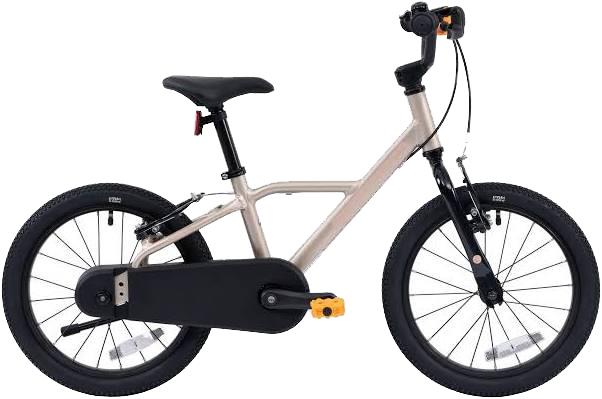
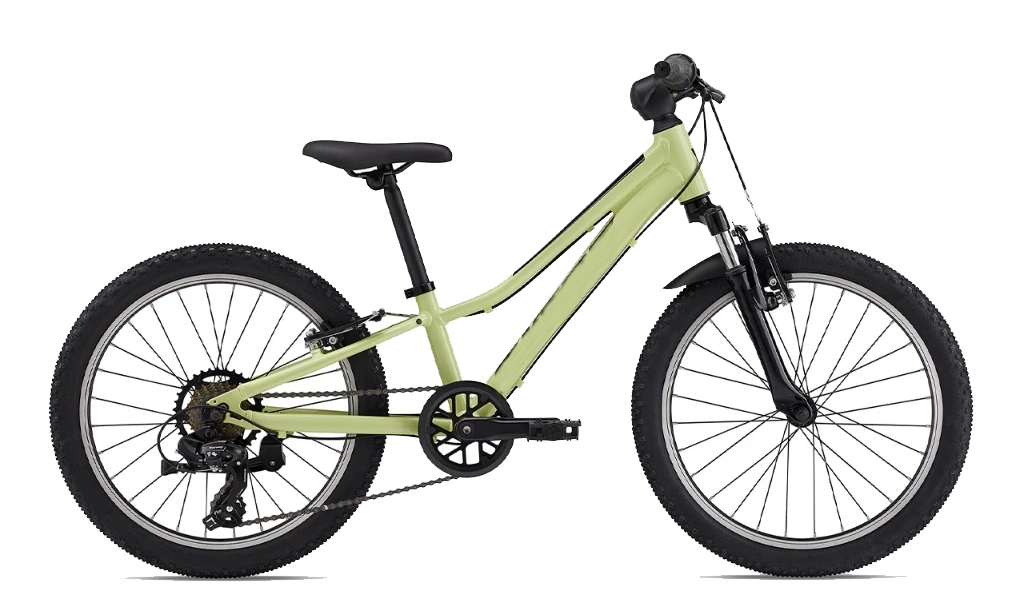
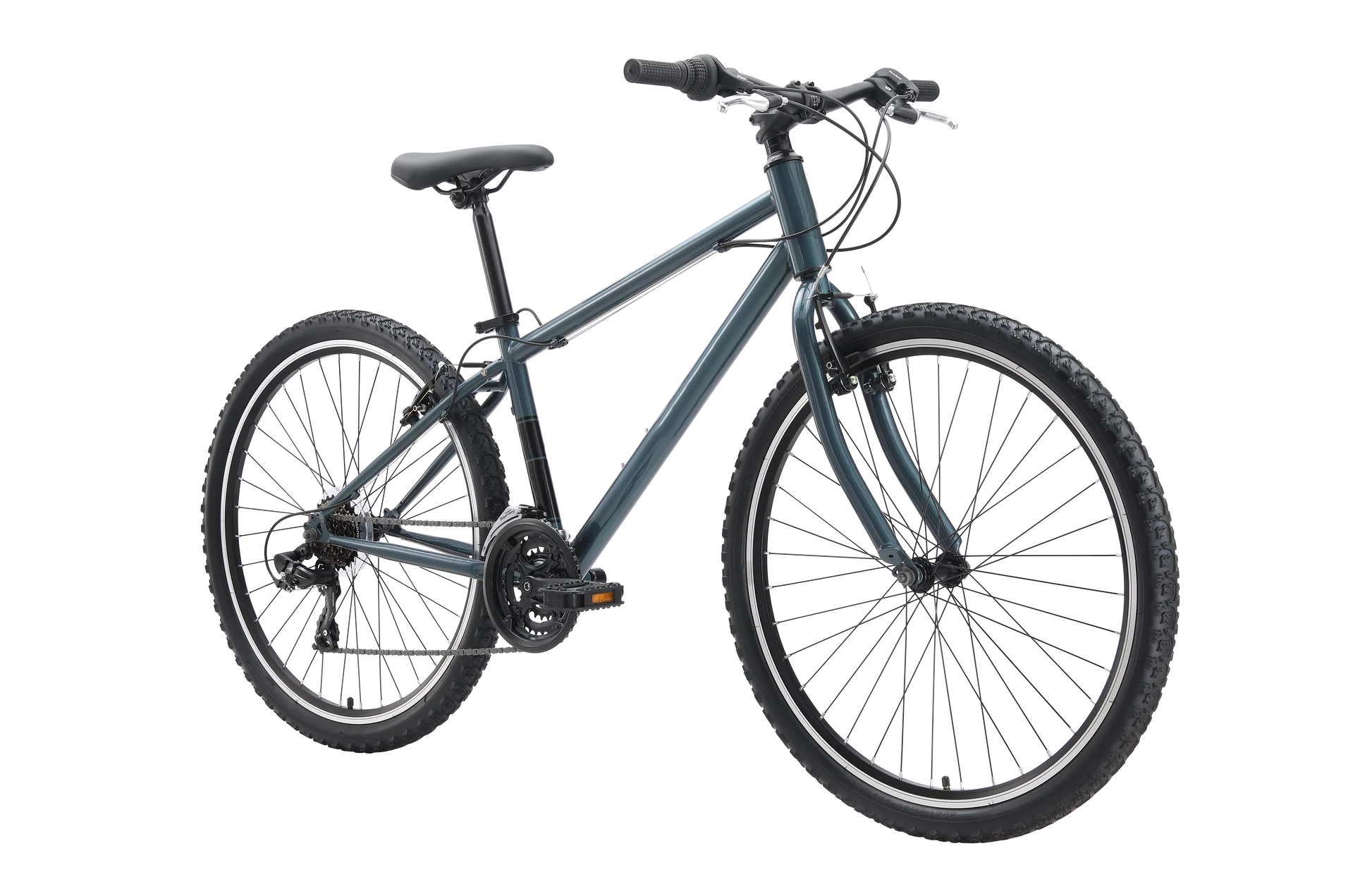
When in doubt, size down — a bike that's slightly too small is easy to control, while one that's too big is scary and hard to balance. They'll grow into the next size soon enough.
What slows kids down (and what doesn't)
Things that don't matter much:
- Weight, height, build
- Whether their parents cycle
- Whether they've done other sports
Things that do matter:
- Mood on the day (skip the lesson if they're tired or grumpy)
- Bike fit (saddle should be low enough for both feet flat)
- Whether the adult coaching them is calm
That last one is the biggest. Kids read frustration like a heat map. If you've tried teaching your own child and it became tense — that's not a kid problem. That's a "loving parent" problem. Let someone neutral take over and you'll be surprised how quickly things click.